
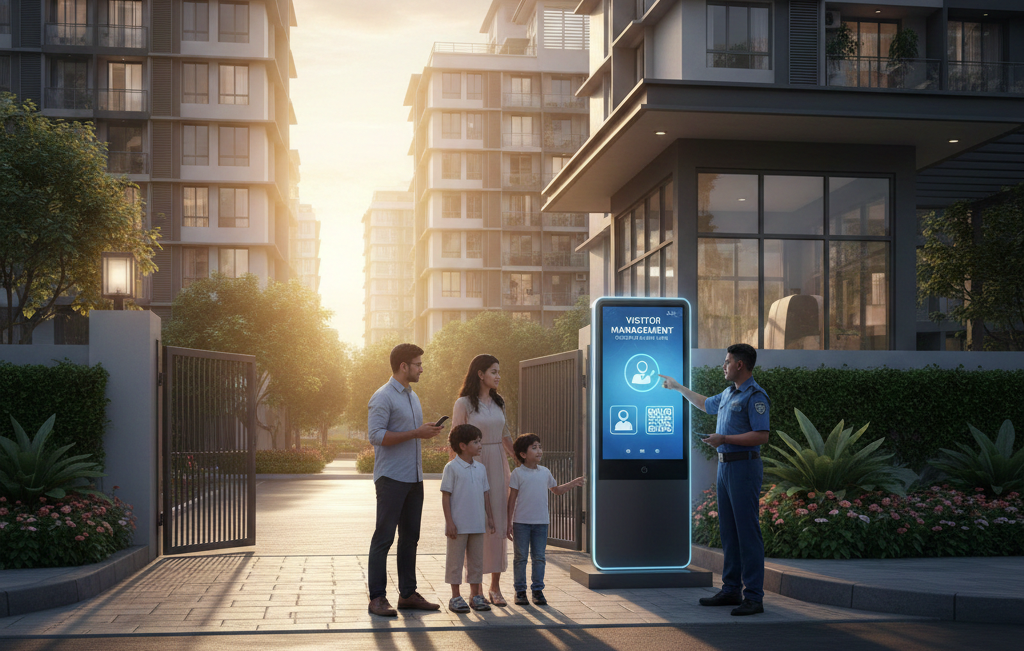
Residential Premises Security Rules & System
The following rules and security system implementation should be expected by the residential management from the security guard company.
To implement this system step-by-step, the management must provide adequate time, environment, required resources, and cooperation.
These rules may be modified depending on special circumstances or incidents.
- Entry of Persons and Vehicles in Residential Premises
- Parcels and Delivery Persons Related to Residents
- Domestic Work, Building Work & Workers
- Responsibilities of Building Management and Residents
- Conclusion
Entry of Persons and Vehicles in Residential Premises
Generally, three categories of persons enter the building premises (excluding government and administrative officials). One category includes residents and persons related to residents, for which the following general security rules are provided.
These rules may be modified depending on special circumstances or incidents.
1. Residents
• Until security guards become familiar with the residents, they may question every person entering the building. The management must inform residents about this in advance.
• After identification is established, residents will not be required to register their entry unless necessary.
• However, it is mandatory that CCTV cameras clearly record all individuals at entry and exit points.
2. Resident Vehicles
• Until security guards become familiar with resident vehicles, they will question all vehicles entering the premises. Management must inform residents about this beforehand.
• Once vehicles are identified, vehicle entries will generally not be recorded unless required.
• CCTV recording must clearly capture vehicle images and number plates at entry and exit points.
• If inconvenience occurs due to replacement or new security guards, the building management may issue vehicle identification stickers to residents for quick recognition.
• Before closing the main gate at midnight, security guards must conduct a patrol in the parking area to ensure no unauthorized vehicle is present.
3. Persons Related to Residents (Visitors)
• Visitors should not be allowed entry without verification. If suspicion arises during questioning, security guards will stop the person until the concerned resident arrives at the security desk and provides complete contact details, purpose of visit, and exit time.
• After receiving correct details, the guard will contact the resident and allow entry only after permission.
• To properly implement this service, the building management must provide intercom facilities or a smartphone with recharge and residents’ contact numbers.
4. Vehicles of Visitors
• Vehicles belonging to visitors should not be allowed entry without prior permission.
• If such vehicles remain in the premises for more than 15 minutes, the resident must inform security in writing in the Vehicle Entry Register.
• A separate parking space should be allocated for such vehicles.
Parcels and Delivery Persons Related to Residents
Residents regularly receive parcels, letters, food deliveries, groceries, milk, etc. through third-party delivery personnel. The following general rules apply.
1. Parcels
• No parcel or delivery will be allowed inside the building after midnight (12 AM). Residents must collect them from the entrance gate.
• For any parcel entering the building:
- Verification must be done through intercom, or
- Through mobile phone, or
- By issuing a gate pass signed by the resident upon receiving the parcel.
• Delivery persons must exit the premises within 15 minutes.
• If a parcel larger than 6 × 9 inches is delivered (such as Flipkart orders or similar), residents must inform security in advance. Without prior information, guards will not allow the parcel upstairs. The resident must either collect it personally or take written responsibility.
• Security guards will not accept any resident parcels under their custody, and residents should not insist on this.
• Promotional pamphlets will not be accepted by guards. Delivery persons must drop them in a designated box at the entrance.
• If management provides a secure location at the security cabin, pamphlets may be collected there for residents to pick up later.
• Grocery deliveries require prior information. Verification will follow the same intercom/mobile/gate pass procedure.
• Regular service providers (milk delivery, flower vendors, garbage collectors, etc.) must have prior registration including name, address, and contact number with security.
• Entry should only be allowed to registered regular persons. If a new person arrives without prior information, entry must be denied.
2. Delivery Persons
• No delivery person should be allowed entry without an official ID card.
• If the person does not have ID, the resident must provide written authorization and take responsibility.
• The security guard must take a photograph of the ID card, which includes name, address, contact number, photograph, and company details.
• CCTV recording at entry and exit points must clearly capture the person’s image.
3. Delivery Vehicles
• Delivery vehicles should not be allowed inside the premises.
• If two-wheelers are permitted, they must be parked within CCTV coverage and security guard visibility.
• Four-wheelers should generally not be allowed.
• If large vehicles are required to transport goods, prior written information must be provided including:
- Vehicle type and number
- Driver name and contact number
- Owner name and contact number
- Arrival and departure time
- Details of goods being transported
Security guards have the right to verify this information before allowing entry.
Domestic Work, Building Work & Workers
Various third-party workers regularly enter buildings for domestic or maintenance work. The following rules apply.
1. Workers
• Regular domestic workers must have ID cards issued by building management or residents including full details and photograph.
• Entry without ID card should not be allowed.
• Their entry and exit must be recorded in a separate register, including items carried inside.
• Items will be checked again while exiting.
• If the worker is female and the guard is male, only verbal verification and questioning will be done.
• Replacement workers will not be allowed without written authorization from the resident including contact details and work duration.
• For any temporary work inside a house, residents must personally come to the security cabin and submit written responsibility.
• If work continues in the absence of the resident, written prior information must include:
- Contractor name and contact details
- Nature of work
- Tools used
- Number of workers and their details
- Duration of work
• If workers are left inside the house, the contractor must lock the house and deposit the key with security until the end of the shift.
2. Worker Vehicles
• Domestic workers’ vehicles should not be parked inside the premises.
• If prior permission is granted, they may park in a designated area with a temporary parking tag, which must be returned to security while leaving.
• Vehicles bringing tools or materials must be pre-registered with security, including vehicle number, driver details, and materials transported.
• All such vehicles must park in designated areas only.
3. Tools and Equipment
• A written list of tools carried by workers must be submitted to security.
• Tools must be verified both at entry and exit.
• If any suspicious item is found, security guards have the right to deny entry or exit until management approval.
Responsibilities of Building Management and Residents
- The building must be fully fenced with a proper security gate and guard cabin with sufficient lighting.
- No dark or unused spaces should exist inside the premises.
- The entire building should be under CCTV surveillance with recording.
- Residents should be informed about the security system and asked to cooperate with security guards.
- Residents must treat security guards with respect and encouragement.
- Residents must not assign personal work to security guards.
- Residents should avoid financial, personal, or domestic relationships with security guards.
- Management must provide all necessary facilities for security guards to perform their duties.
- Entry should be restricted to dangerous areas.
These general residential security rules and systems have been developed by Mahabh Facility Management after studying various crimes, incidents, criminal behavior patterns, and working methods observed at different locations.
These rules are general guidelines designed to reduce the risk of common security incidents. Their effectiveness depends on consistent daily implementation.
The rules and systems may be updated periodically, and updated notices will be issued accordingly.
If any building requires special security planning, detailed recommendations will be provided in the Building Inspection Report.
Building management may also submit suggestions or changes, which will be reviewed by Mahabh Management for appropriate action.
These rules represent primary security standards, which may be modified according to the specific needs of each building. dolor sit amet, consectetur adipiscing elit. Ut elit tellus, luctus nec ullamcorper mattis, pulvinar dapibus leo.